
Author: adminos

  • Case Study: Are These Louis XV-Style Bedside Cabinets Antique or Vintage?

    Case Study: Are These Louis XV-Style Bedside Cabinets Antique or Vintage?

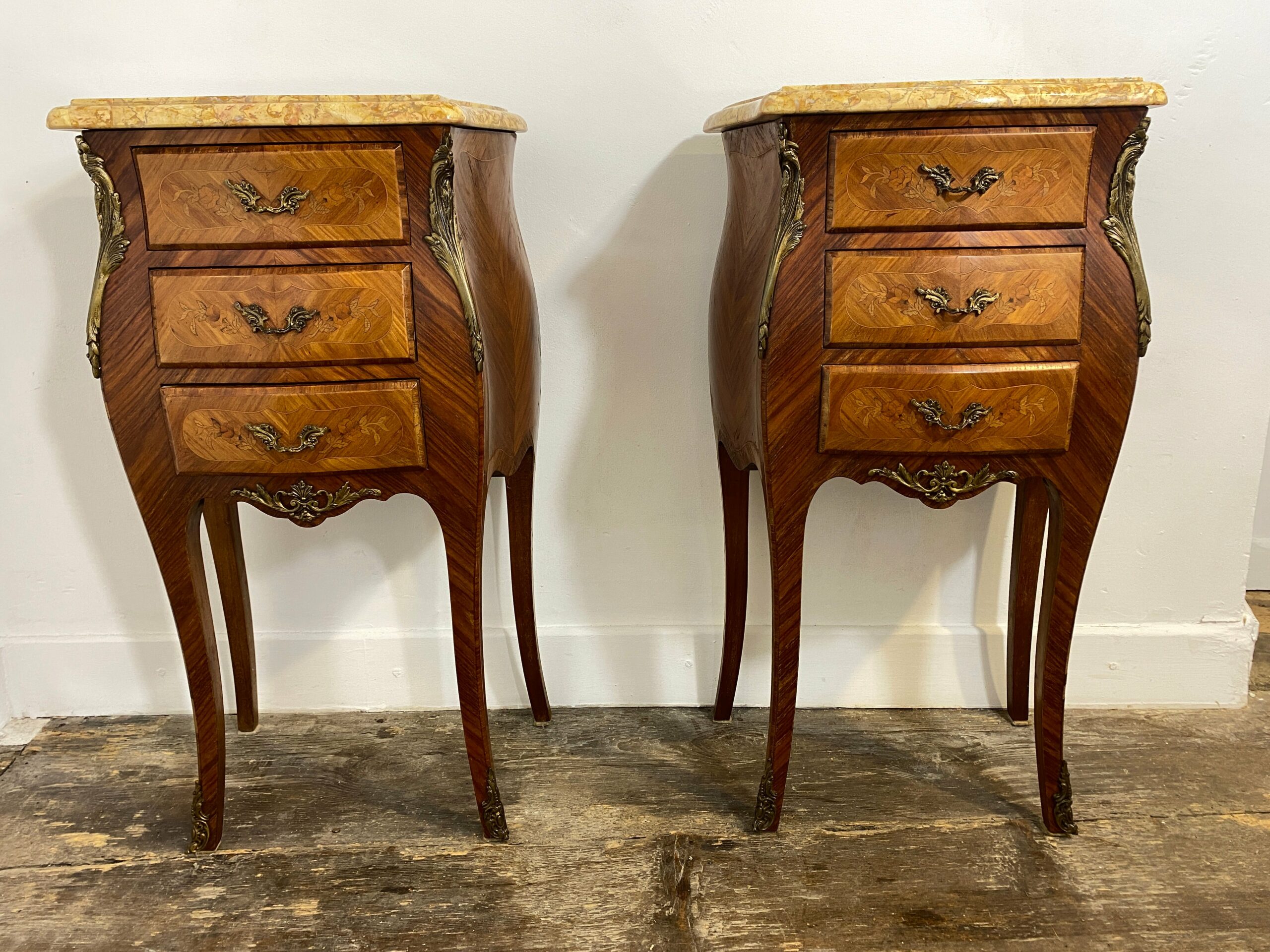
    At first glance, this elegant pair of Louis XV-style bedside cabinets appears convincingly antique. Curved legs, floral marquetry, marble tops — all the visual cues are there. Yet appearances can be deceiving.

    This case study explores how subtle construction details, materials, and finishes can shift a piece from antique to vintage, even when the design language closely imitates the past. Some of these distinctions are not immediately visible — but they are crucial.

    The initial question

    The cabinets raised a straightforward but important question: What is the value and history of these small wooden bedside cabinets with marble tops and three drawers?

    At first inspection, several elements stood out:

    • finely executed floral marquetry
    • elegant proportions inspired by Louis XV design
    • marble tops in good condition
    • overall excellent preservation

    Despite their classical appearance, the way the pieces were constructed suggested they were not true 18th- or 19th-century antiques, but rather later interpretations.

    Style and visual characteristics

    Louis XV inspiration

    The cabinets clearly reference Louis XV aesthetics:

    • curved “bombé” forms
    • cabriole legs
    • ornate bronze-style mounts
    • decorative marquetry with floral motifs

    These elements were not only used in the 18th century but were also widely reproduced later, especially during periods of stylistic revival.

    Materials and craftsmanship

    Wood and marquetry

    The cabinets are constructed with veneered wood, likely walnut or mahogany, featuring decorative marquetry made from lighter contrasting woods. The precision and consistency of the veneer suggest workshop production rather than hand-cut, irregular early craftsmanship.

    Marble tops

    The warm-toned marble tops — possibly Siena or similar — are typical of both late 19th-century revival furniture and high-quality mid-20th-century reproductions.

    Ormolu mounts

    The bronze or brass mounts show a pleasing patina, though their uniformity and finish hint at later production techniques rather than early hand-cast ormolu.

    Construction details: where the story shifts

    Construction is often where furniture reveals its true age.

    Drawers and joinery

    The drawers are dovetailed, indicating quality craftsmanship. However, the dovetails appear machine-cut, a technique that became common in the 20th century and is rarely seen in earlier French antiques.

    Drawer linings

    The presence of decorative floral paper lining inside the drawers is another revealing detail. Authentic 19th-century French furniture typically has unfinished or simply waxed interiors. Decorative linings are far more common in 20th-century reproduction furniture.

    Could these cabinets date from the 1950s?

    This question became central to the appraisal. Several indicators point toward mid-20th-century production, particularly the 1950s:

    • Louis XV revival furniture was highly popular after World War II
    • Uniform finishes and consistent veneer quality suggest modern workshop methods
    • Machine-cut joinery reflects post-war manufacturing advances
    • Decorative drawer linings align with mid-century tastes
    • Overall condition appears unusually fresh for genuine 19th-century pieces

    During the 1950s, many European workshops produced high-quality reproductions for affluent interiors — furniture designed to echo historical elegance while fitting modern living standards.

    Conclusion: antique or vintage?

    While these bedside cabinets beautifully emulate Louis XV design, their construction details tell a different story. They are not true antiques, but rather high-quality vintage reproductions, most likely dating from the mid-20th century (circa 1950s).

    This does not diminish their value — quite the opposite. Such pieces remain highly desirable for interiors seeking classical elegance without the fragility or constraints of genuine antiques.

    Estimated value

    As well-crafted vintage furniture, a pair like this would typically appeal to collectors and interior designers alike. Market value depends on condition, provenance, and regional demand, but comparable pieces generally range between:

    €800 – €1,500 for the pair

    Why this distinction matters

    Understanding whether a piece is antique or vintage is not about hierarchy — it is about accuracy. Vintage furniture often offers:

    • greater durability for daily use
    • strong decorative presence
    • historical reference without museum fragility

    In many interiors, vintage reproductions are the more practical — and honest — choice.

    About this Journal

    This case study is part of the Journal, where individual pieces are examined not only for what they resemble, but for what they truly are — through materials, construction, and time.
  • Appraisal of Antique French marble-top Cabinet / Nightstand

    Appraisal of Antique French marble-top Cabinet / Nightstand

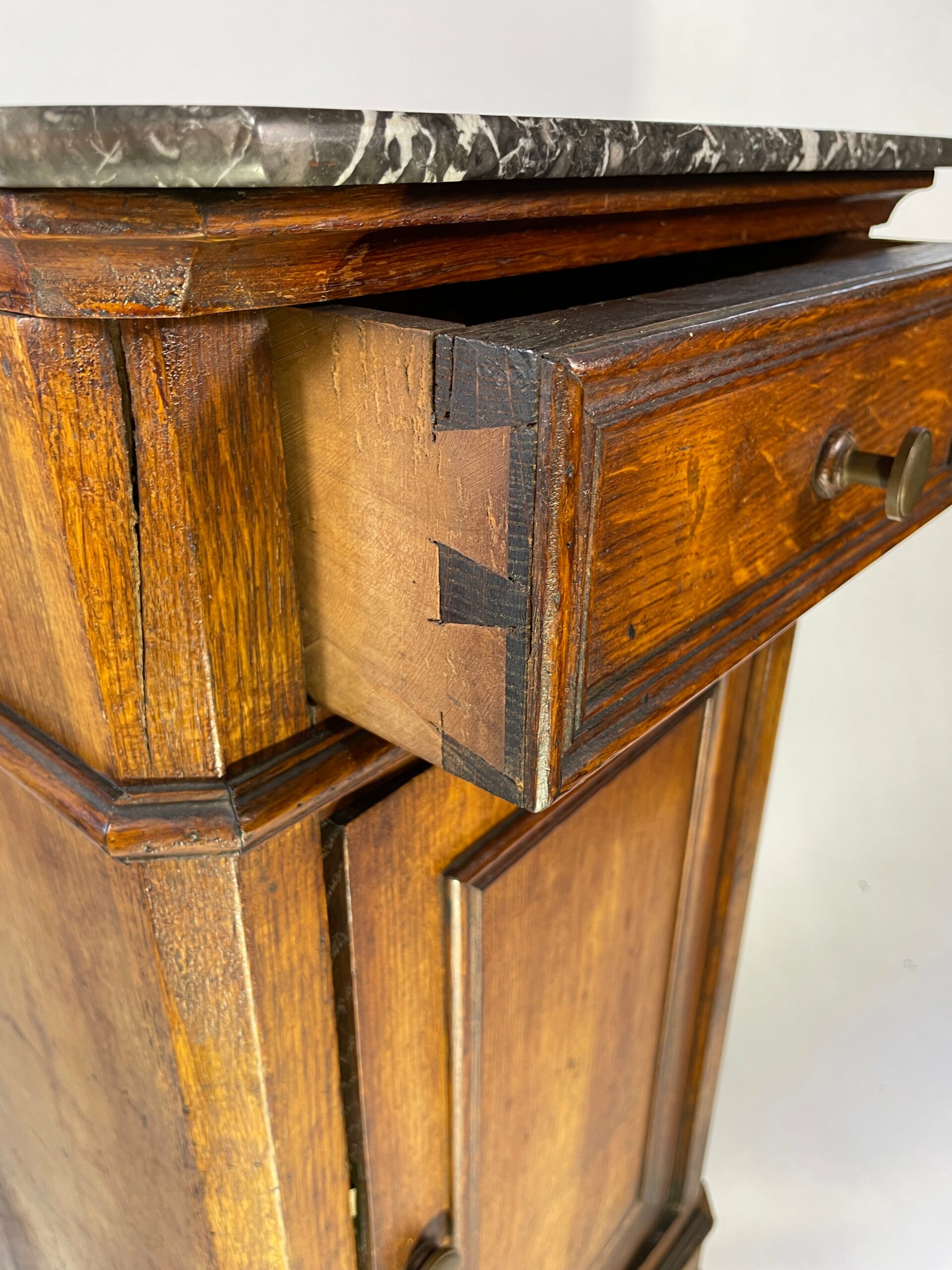
    I like to know the history and value of this small wooden cabinet, possibly a bedside table or washstand, featuring a marble top, a drawer, and a cupboard. So I go to our AI appraisal GPT “Antique Insight”.

    At Antique Insight, I upload some pictures and click the prompt: Analyze the image and description provided. Identify the possible origin, era, and style based on material, craftsmanship, and any unique marks.

    Antique Insight Analysis

    Antique Insight gives me the following return:

    1. Era

    Likely late 19th century to early 20th century (c. 1880–1920). The combination of the marble top, simple craftsmanship, and functionality suggests it was part of utilitarian furniture from this period. Its clean lines indicate a transitional period between Victorian and more streamlined Art Nouveau or Edwardian styles.

    2. Style

    French provincial or European country style is probable. The restrained ornamentation, turned legs, and practical design are typical of rural furniture styles meant to serve functional purposes while retaining subtle elegance.

    3. Materials

    • Wood: Likely walnut, oak, or a similar hardwood, based on its warm tone and grain.
    • Top: White or gray veined Carrara marble, a common material for washstands and small tables of this period.
    • Hardware: The small, round, stamped-metal knobs appear to be brass, with a simple decorative pattern typical of late 19th-century craftsmanship.

    4. Craftsmanship

    Dovetail joints in the drawer indicate traditional hand-cut joinery, a hallmark of quality woodworking from this period. The interior of the cabinet shows practical finishing, as was typical for functional furniture.

    5. Function

    This piece may have originally been a nightstand or washstand, as indicated by:

    • The marble top (durable and resistant to water)
    • Small drawer for toiletries
    • A cupboard for storage
    • The lower shelf could hold additional items, like a water pitcher or towels

    Origin

    French or European, based on the design, materials, and craftsmanship. This style of furniture was commonly produced in France and neighboring regions for provincial or middle-class homes.

    Condition and Value

    Condition: Appears to be in good structural condition, with minor wear consistent with age (e.g., scuffs, patina on the hardware). The marble top has some surface markings, but no visible cracks, which is a positive feature.

    Value: If authentic and not a reproduction, a piece like this could range in value from $150 to $500 USD, depending on market demand, provenance, and restoration quality. It is functional and appealing to collectors of antique furniture or those seeking rustic or vintage decor.

    Conclusion

    I think this is an accurate appraisal.

    – Marc

  • What Furniture Is Considered Vintage?

    What Furniture Is Considered Vintage?

    A Clear Guide from a French Vintage Furniture Expert

    It is a question I hear often: what furniture is truly considered vintage — especially when searching for pieces with character, history, and quiet soul. The word vintage appears everywhere today — in interiors, marketplaces, and across social media. It is often used generously, sometimes too generously. Furniture that merely looks old is quickly labelled vintage, while truly time-shaped pieces are sometimes overlooked.

    Vintage furniture is not defined by trend or surface style. It is defined by age, craftsmanship, materials, and the quiet imprint of lived time. This guide offers a clear, experience-based answer to what qualifies as vintage furniture — and what does not. Some of these pieces have passed through my hands over the years; others I still live with every day.

    What age is considered vintage furniture?

    In general, furniture is considered vintage when it is approximately 30 to 80 years old. This typically places vintage pieces between the 1940s and the late 1980s.

    • Furniture older than 80–100 years is usually classified as antique
    • Furniture younger than 30 years is better described as second-hand or retro

    Age alone, however, is never enough. Time must be accompanied by quality and intention.

    What qualifies as vintage furniture?

    For furniture to truly qualify as vintage, it should reflect more than a date on a calendar. Authentic vintage furniture typically shows:

    • Solid, durable construction
    • Natural materials such as wood, stone, or metal
    • Design rooted in a specific historical period
    • Wear that feels natural, earned, and coherent

    A mass-produced cabinet from the 1970s made with low-quality materials may technically be old, but it lacks the depth that defines vintage. A simple French farmhouse table from the same era, shaped by daily life, very much qualifies.

    Vintage furniture is not about perfection. It is about endurance.

    What is the difference between vintage and antique furniture?

    The distinction is largely based on age, but also on character.

    • Antique furniture is typically over 100 years old and often preserved rather than used daily
    • Vintage furniture remains practical, functional, and deeply suited to contemporary living

    Vintage pieces bridge past and present. They were made to be used — and they still are.

    Is furniture from the 1980s or 1990s considered vintage?

    Furniture from the early 1980s can sometimes be considered vintage, particularly when craftsmanship and materials remain strong. The 1990s and later are more ambiguous. Many pieces from this period were produced quickly, cheaply, and without longevity in mind.

    While exceptions exist, most furniture from the 1990s does not yet carry the substance or patina associated with vintage furniture.

    What is often mistaken for vintage furniture?

    A common source of confusion comes from furniture that is:

    • Newly made in a vintage style
    • Artificially distressed
    • Reproduced at scale
    • Designed to look old rather than age naturally

    True vintage furniture does not attempt to appear old. It simply carries time within it.

    How can you tell if furniture is truly vintage?

    There are a few reliable indicators used by experienced professionals.

    Construction

    Look beneath the surface. Solid joinery, traditional techniques, and thoughtful assembly are key signs.

    Materials

    Vintage furniture relies on honest materials — not composites disguised as something else.

    Patina

    Wear should appear where hands naturally rest, where feet touch the floor, where drawers open and close. It should never feel staged.

    Presence

    Vintage furniture has weight — physically and visually. It feels grounded, calm, and settled.

    Many of the pieces I encounter come from rural French homes, where furniture was made to be used daily and kept for generations.

    A common mistake buyers make

    Many buyers search for vintage furniture that looks untouched. In reality, furniture without signs of life is often not as old as it appears.

    Patina is not damage. It is memory made visible.

    Lessons from experience

    Over the years, I have seen pieces mistaken for vintage simply because they follow a trend. I have also seen humble, understated furniture overlooked despite its authenticity and quality.

    There are moments when choosing not to label a piece as vintage matters more than selling it as such. Integrity is part of the craft.

    Is vintage furniture a strict definition or a flexible one?

    Vintage furniture exists between structure and nuance. There are clear guidelines — age, materials, construction — but vintage is also shaped by use, intention, and survival.

    It is not a label applied afterward. It is something furniture becomes.

    Why vintage furniture matters today

    In a world driven by speed and disposability, vintage furniture offers continuity. It brings depth, texture, and quiet confidence into modern spaces.

    Vintage pieces do not shout. They anchor.

    In essence

    Vintage furniture is not simply old — it is shaped by time and still strong enough to live with today.

    Frequently Asked Questions

    Is 20-year-old furniture considered vintage?

    No. Most professionals consider furniture vintage at around 30 years or older.

    Does vintage furniture have to be valuable?

    Not financially — but it should hold material and functional value.

    Can modern furniture become vintage one day?

    Only if it is built to last, both structurally and aesthetically.

    About the author

    With years of hands-on experience sourcing, evaluating, and living with vintage French furniture, Marc van Bekkum works daily with pieces shaped by time, craftsmanship, and use. His approach values material honesty, quiet character, and furniture that continues to serve modern life without losing its past.

Bedankt!

Je bent succesvol ingeschreven voor onze newsletter en ontvangt 10% korting op je eerste bestelling.